Europe Demographic Shift


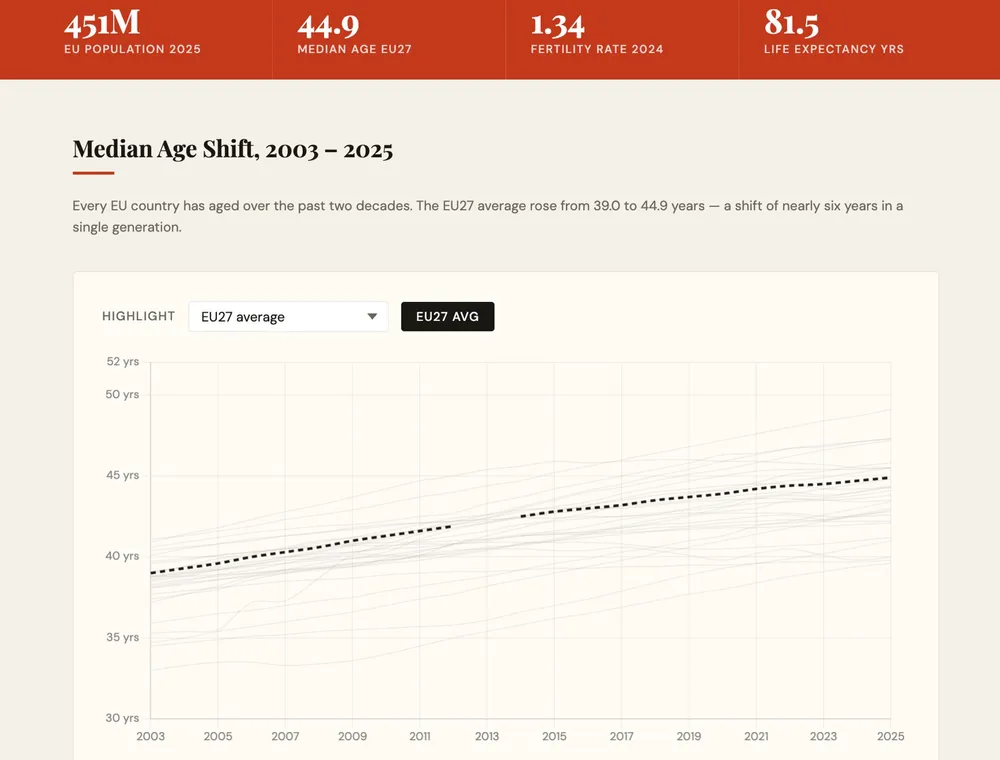
Eurostat just published their Demography of Europe – 2026 edition, an interactive report covering population trends across all 27 EU member states over several decades. It is worth checking if you are interested in demographic data.

The headline is that the EU's 451 million people are growing slowly but ageing very fast. The share of people aged 65 and over has climbed from 17% to 22% in just two decades; the median age now sits at 44.9 years; and deaths have outnumbered births every year since 2012. With a fertility rate of just 1.34, well below the 2.1 needed to sustain a population.

What's keeping the numbers steady is immigration: nearly 6 million people arrived in 2024 alone. A quarter of children are now born to foreign-born mothers. The numbers make it pretty clear that Europe's demographic makeup is going to look quite different in a generation from now.

Hanta is not Covid


A couple of days ago a colleague shared one of those "infection tracker" maps about the Andes hantavirus outbreak linked to the MV Hondius cruise ship, which was quarantined shortly after. I have to admit, for a second it genuinely felt like early 2020 again — cruise ship, international passengers, severe respiratory illness, deaths. That COVID-era anxiety is still there, just under the surface.

But this is really not the same thing! Andes hantavirus is already well understood, and unlike COVID it doesn't spread easily — it usually requires close and prolonged contact. Authorities acted quickly once the ship arrived in Tenerife, passengers were monitored and repatriated, and the ECDC considers the risk to the general EU population to be very low. Something to keep an eye on, but not something to panic about.

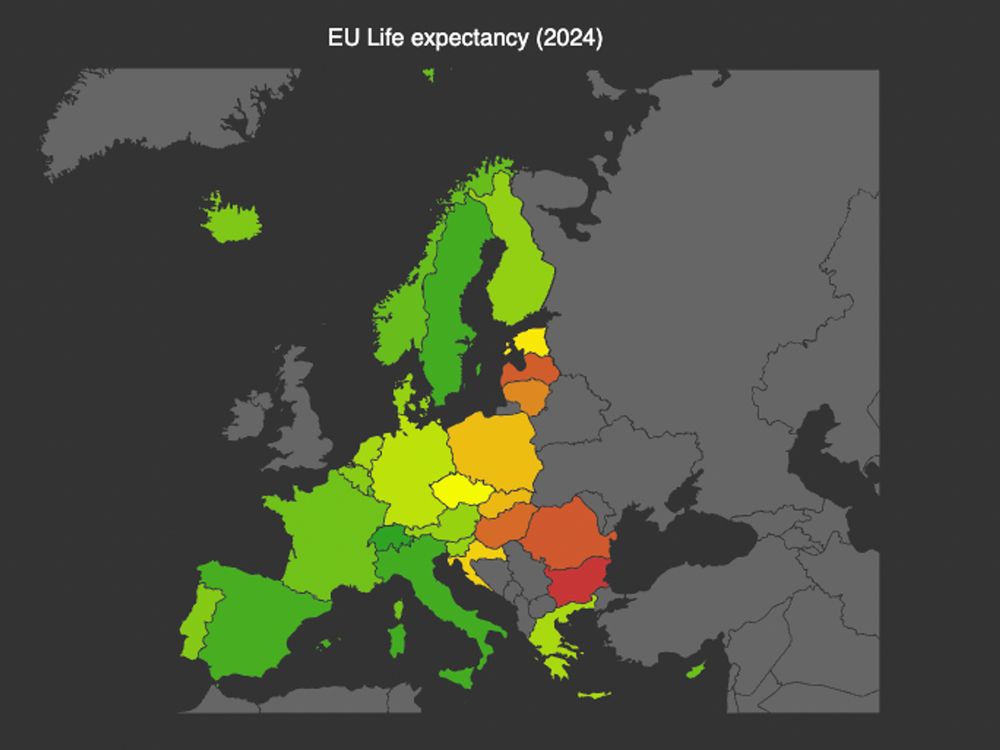
EU Life Expectancy Post-COVID-19


According to some data published recently by Eurostat, life expectancy at birth in the European Union climbed to 81.7 years in 2024, an increase of 0.3 years compared with 2023.

The figures show notable differences across member states. Italy and Sweden are at the top of the rankings at 84.1 years, followed by Spain at 84.0 years. At the other end of the spectrum, Bulgaria (75.9), Romania (76.6) and Latvia (76.7) recorded the lowest life expectancy.

It's interesting how most countries have now surpassed their pre-pandemic levels. Of the 26 EU countries with available data, 24 saw improvements between 2019 and 2024. The biggest gains were observed in Lithuania (+1.1 years), Czechia, Latvia, and Romania (+1.0 each).

These 2024 results suggest that many EU countries have not only recovered from the setbacks of the COVID-19 pandemic but are continuing to make gradual progress in public health and longevity.

Life expectancy in Europe 2022


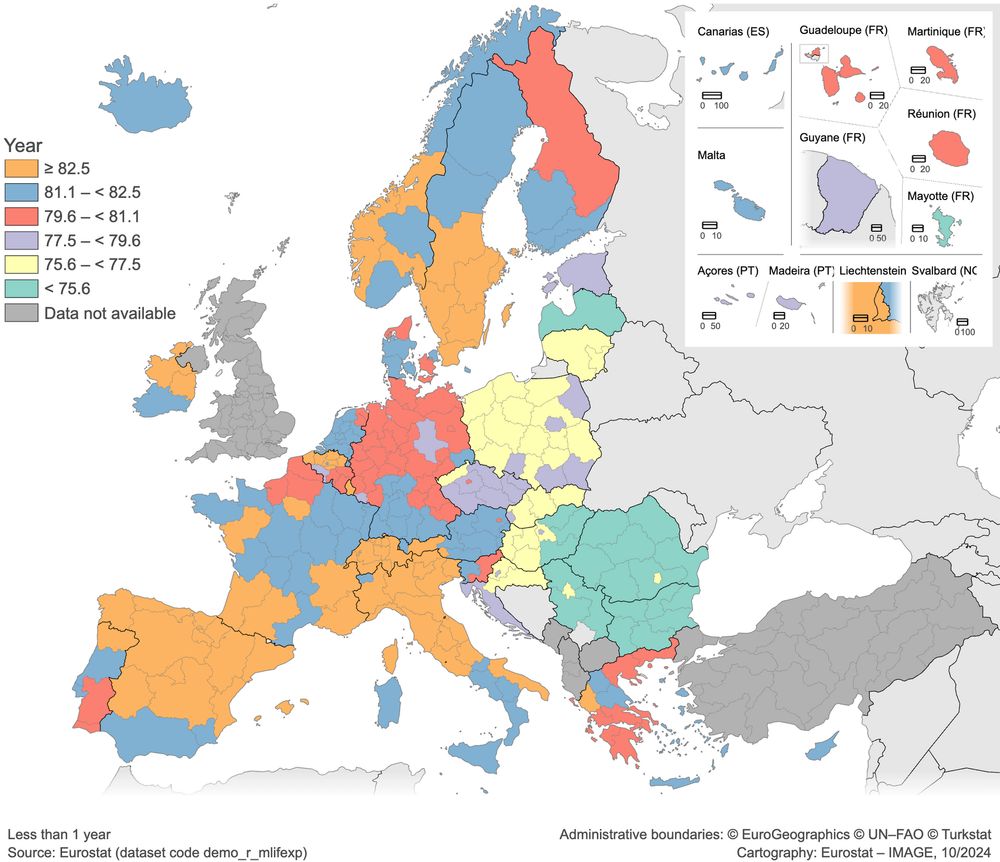
Europe's Eurostat (European Statistical Office) offers a really useful tool called IMAGE, which allows users to create professional thematic maps using NUTS (Nomenclature of Territorial Units for Statistics) boundaries and statistical regions. The tool is user-friendly and offers a wide range of customization options, including color schemes, data classification methods, and labels.

Using this tool, I created the image above, highlighting stark contrasts in life expectancy across European regions. Switzerland and Spain lead with impressive numbers, with some Spanish regions reaching a life expectancy of up to 85.2 years. Swiss citizens also enjoy longevity, with most regions reporting life expectancies between 83 and 84.6 years. In contrast, Bulgaria presents a different picture, with life expectancy as low as 72.3 years in some regions – revealing a gap of nearly 13 years compared to the highest in Europe.

Even within countries, significant variations exist. Take Belgium, where life expectancy ranges from 79.2 to 83.2 years across different regions. Germany shows similar regional disparities. The map also highlights the relatively low life expectancy in Eastern Europe, with most regions in Romania, Bulgaria, and Hungary reporting figures below 75 years.

Happy St. Patricks Day 2024


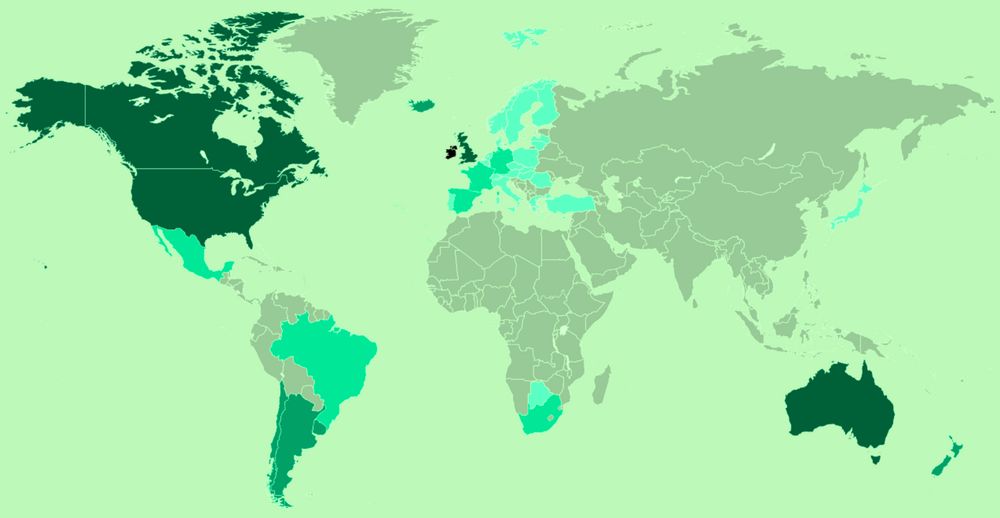
According to Wikipedia, the Irish population is approximately 6.9 million, but the Irish diaspora is estimated to include 50 to 80 million people worldwide, making it one of the largest of any nation.

Historical factors such as conflict, famine, and economic hardships have spurred emigration from Ireland. People of Irish descent are predominantly found in English-speaking nations, notably Great Britain, the United States, Canada, New Zealand, and Australia.

Some significant Irish communities also exist in Argentina, Mexico, Brazil, Germany, and the United Arab Emirates, but the United States hosts the largest population of Irish descent, while Australia boasts the highest percentage of Irish descendants outside of Ireland.

To all of you, my fellow Irish men and women, whether you reside within the shores of the emerald island or beyond, I wish you a happy St. Patrick's Day in 2024!

Life expectancy in Europe


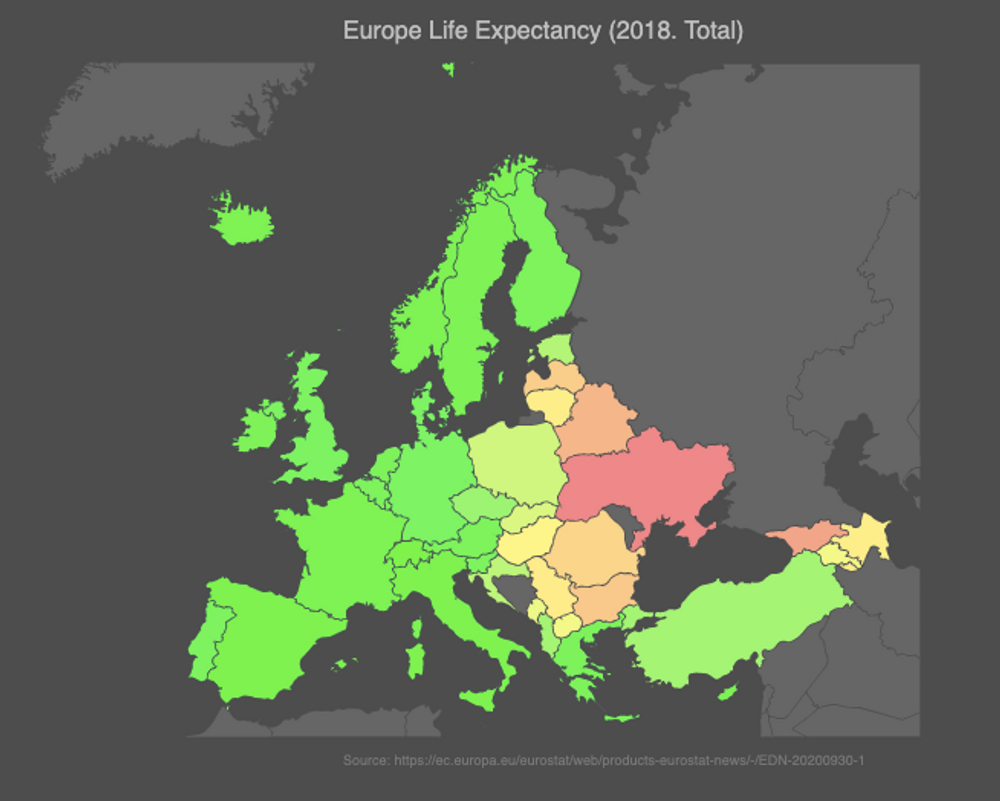
A friend of mine who works at the European Union shared an interesting article about the Life Expectancy in the different EU regions.

The last data available from 2018 shows that Switzerland (83.8), Spain (83.5), and Italy (83.4) had the highest life expectancy, as you can see on the map above.

COVID-19 Surges in CA, FL and TX


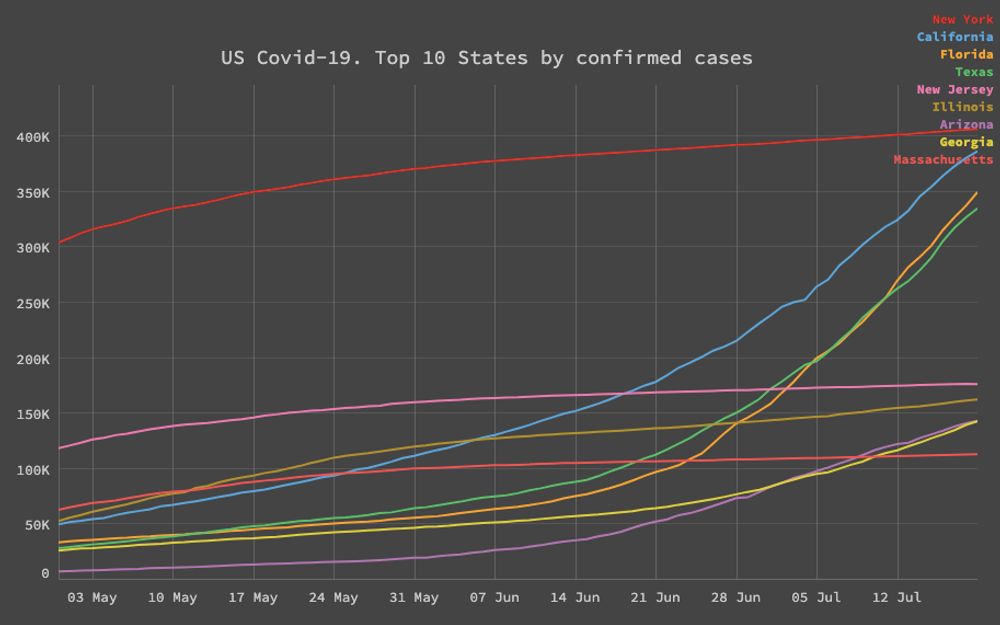
The US has more than 3.7 million confirmed cases of Covid-19 and is therefore the country with the highest number of those in the world. What has been in the news lately is how states that rushed to reopen as quickly as possible, such as Texas and Florida, have had a steady and exponential increase in the total number of cases.

Next to California, which has also seen a sharp increase in the number of cases, mainly in Los Angeles county, those states are getting closer to matching the numbers of New York. It feels like a cautionary tale that "going back to normal" won't mean the pre-COVID-19 normal until there is an effective vaccine or treatment in place.

Fortunately an mRNA vaccine trial preliminary report in the NEJM stated the vaccine induced anti–SARS-CoV-2 immune responses in all participants, and no trial-limiting safety concerns were identified. Crossing our fingers for the next phases of those promising results.

Biden is leading in the presidential polls


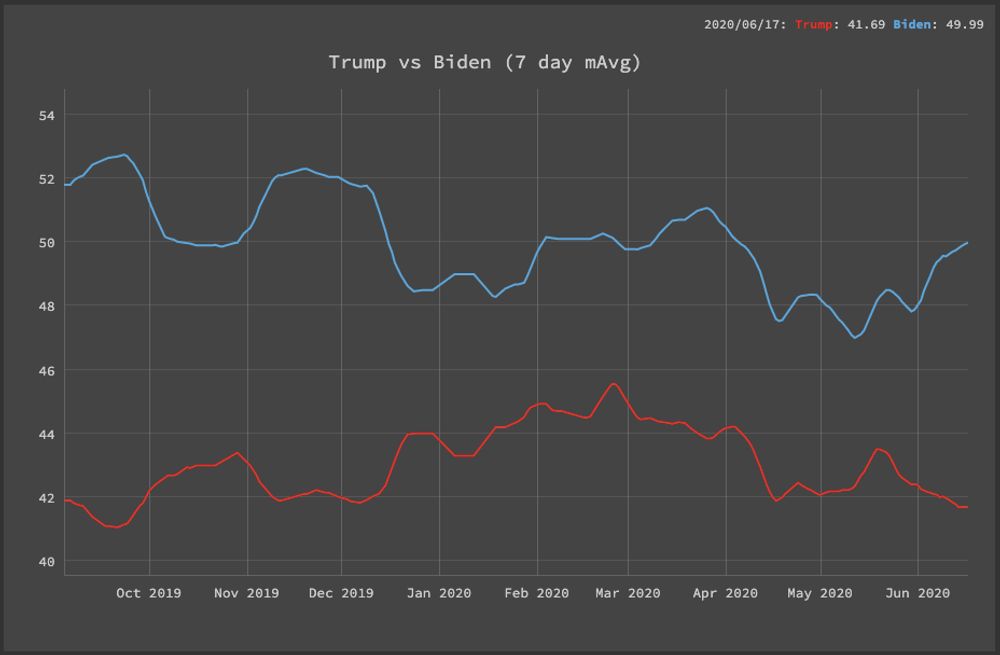
There have been a few articles in the news lately discussing how the current occupant of the White House is losing ground against his democratic rival including: The remarkable collapse of Donald Trump's polling numbers and States that Trump won easily in 2016 are looking tight for him in November. The news is not surprising, given the horrible COVID-19 numbers in the USA, its economic impact, and the wave of protests against police brutality. The data from RealClearPolitics seems to confirm this trend.

Presidential Elections vs World Cup in Colombia


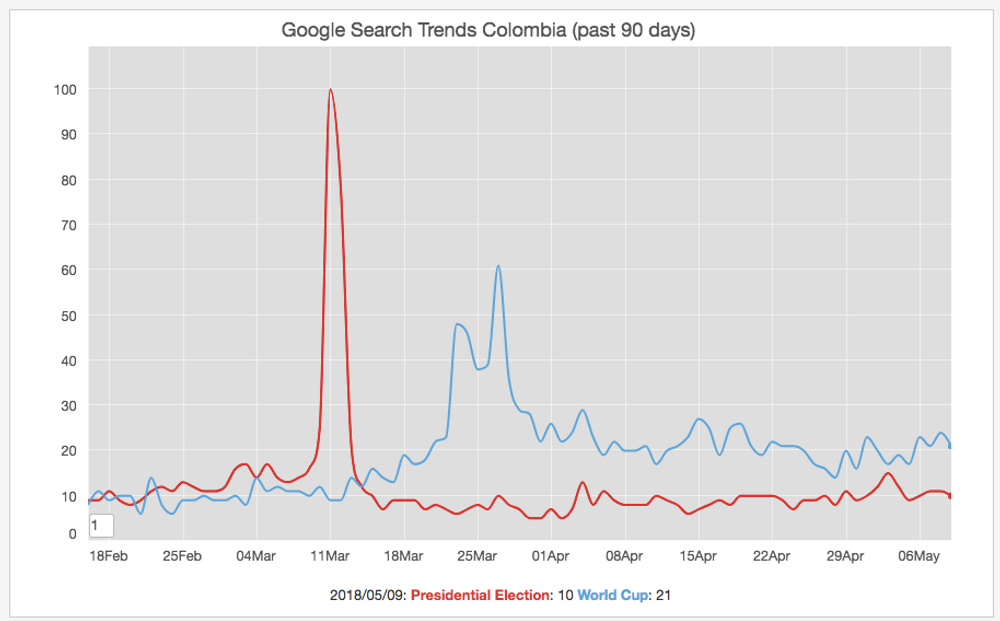
I always believed one of the main problems with the presidential elections in Colombia, held every four years, is the timing: They always coincide with the Football World Cup! Football is an extremely popular sport in the country, and when the national squad qualifies for the tournament, the country turns its attention away from everything except this event.

The previous graph generated with Google Trends Search Data relates to this point at least in the online sphere: The Colombian people are more interested in searching information about World Cup topics than about presidential topics.

The first round of this election will take place on the 27th May and the second round on the 17th June (the World Cup starts on the 14th). Just saying ...

Busiest Airports in Europe


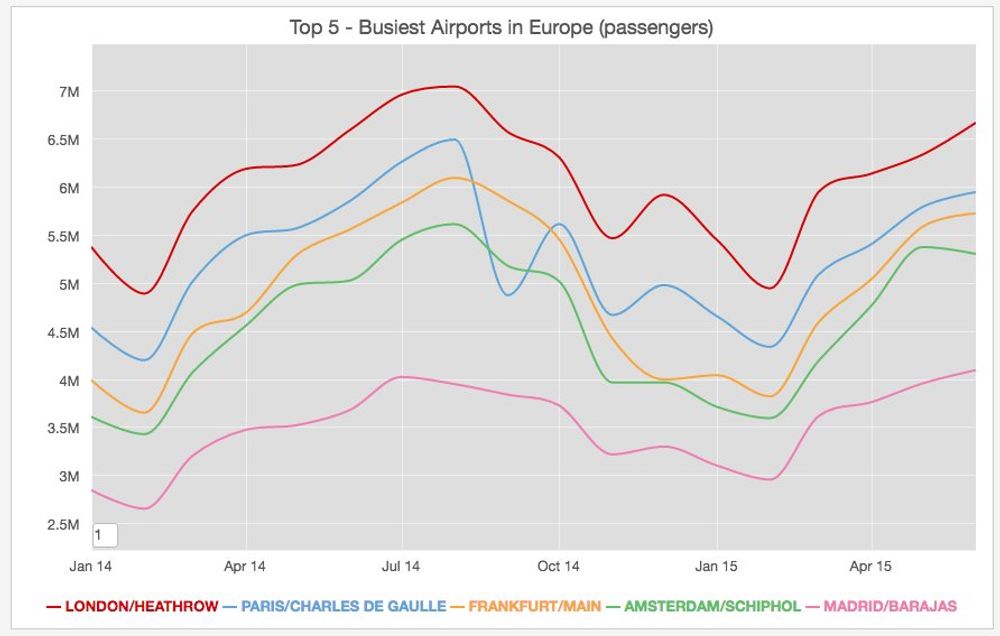
Graph with the busiest airports in Europe based on the passenger totals. Data from: Air Passenger Transport Statistics